
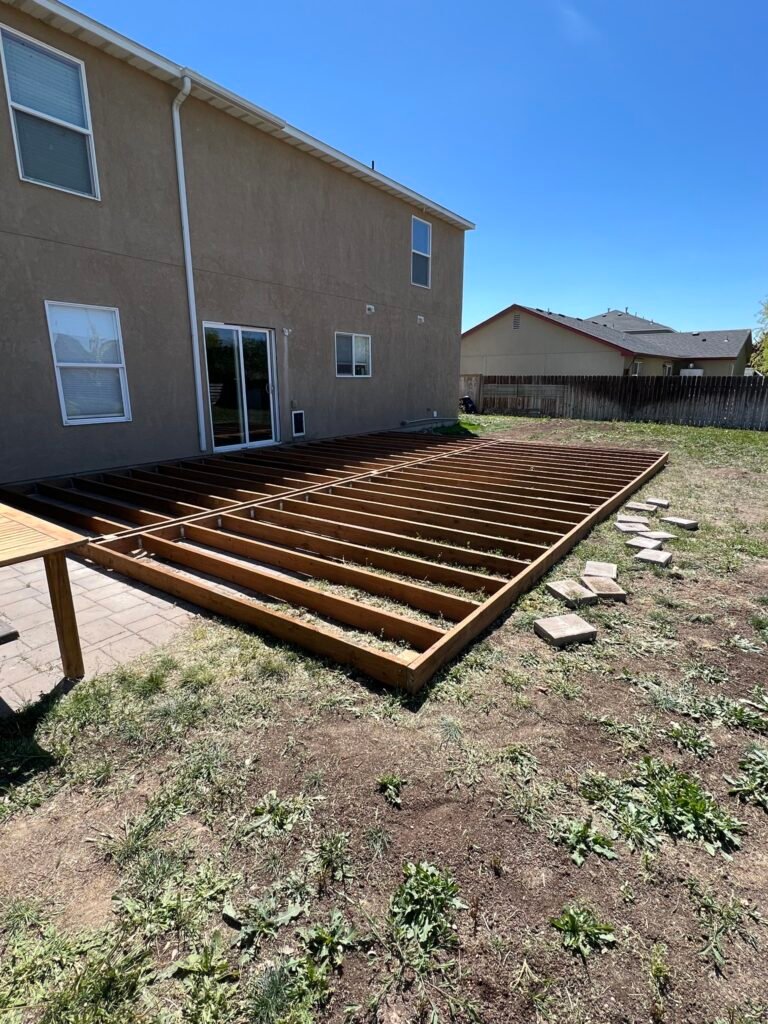
Short answer: probably yes. Most decks in the Treasure Valley need a building permit, and the ones that don’t are the exception — small, low, freestanding, and simple. Here’s how the rules actually work, who handles the permit, and why skipping it is the most expensive way to save a few hundred dollars.
The 30-inch rule
The rule most people run into first is height. As a general rule in Nampa and the surrounding cities, a deck needs a permit if any part of it is more than 30 inches above grade — that’s the ground underneath, not the top of your lawn. A deck that’s 29 inches off the ground on one side and 36 on the other because the yard slopes? It needs a permit. The measurement is taken at the highest point.
A deck also needs a permit if it has a roof or a cover over it, or if it carries a hot tub — the structure has to be engineered for that load, and the city wants to see the numbers. And in most cities around here, an attached deck — one that’s bolted to the house with a ledger board — needs a permit regardless of height, because the connection to the house is structural and a bad ledger connection is how decks collapse.
What usually doesn’t need a permit: a small freestanding deck, under 30 inches high, not attached to the house, not roofed, not carrying a hot tub. A low platform deck out in the yard, basically. Even then, setbacks still apply — the deck has to sit inside your property’s setback lines — and if you’re in an HOA, their rules are a separate question from the city’s.
Rules vary a bit from city to city, so don’t take a neighbor’s experience in Meridian as gospel for a build in Nampa. When in doubt, call the permit desk — a five-minute phone call beats a stop-work order.
Who pulls the permit?
The builder should. Not you. A contractor who tells you to pull your own permit is telling you something about how they work, and it’s not good. The permit application needs the drawings, the footing and framing details, and the load information — that’s the builder’s job, because the builder is the one who has to stand behind it.
When we build a deck, the permit is part of the job. We draw it, submit it, answer the plan reviewer’s questions, and schedule the inspections. The permit fee itself is usually a few hundred dollars depending on the size of the deck, and it’s a line item in the quote — not a surprise later. If a bid you’re comparing doesn’t mention a permit at all, ask about it. Either it’s not in the price, or the builder isn’t planning to get one.
How long does it take?
A straightforward deck permit in the Treasure Valley usually takes a few weeks from submission to issuance — sometimes faster, sometimes slower depending on how busy the permit office is and whether the plans come back with corrections. Covered structures take longer, because the roof adds structural review. Anything unusual — a deck on a slope, a big hot tub, a second story — adds time too.
This is worth knowing before you plan around a date. If you want the deck done for a graduation party in June, the permit process needs to start in April, not May. We build the permit timeline into the schedule up front so nobody’s surprised.
What does the inspection actually check?
The permit isn’t just paperwork — there are inspections along the way, and they’re there for your benefit:
- Footing inspection. Before concrete goes in, the inspector checks the footing holes — depth, size, and that they’re on undisturbed soil. Footings that are too shallow heave in the freeze-thaw cycle, and a deck on heaving footings is a deck that goes out of level and stays there.
- Framing inspection. The inspector checks joist spacing, beam size, ledger attachment to the house, and hardware. The ledger connection is the big one — it’s the most common failure point on attached decks, and the code is specific about bolt size, spacing, and flashing.
- Final inspection. Rail height and spacing, stair dimensions, and the finished structure.
An inspector who catches a footing problem before the concrete is poured just saved you thousands. That’s what the permit buys.
What happens if you skip it
This is the part people don’t think about until it’s too late. An unpermitted deck causes problems in three places:
At sale. When you sell the house, the buyer’s appraiser and inspector will notice a deck that isn’t on the city’s records. At best, it becomes a negotiation point and costs you money. At worst, the buyer requires you to get it permitted after the fact — which means exposing the framing for inspection, possibly tearing out finished work, and paying the permit fee plus penalties. A deck built without a permit can bring down the value of your home instead of adding to it.
With insurance. If a deck fails and someone gets hurt, and the deck was built without a permit or an inspection, you’re in a much worse position with your insurer than if the work was permitted and inspected.
With the city. A neighbor complaint or a future permit application for other work can trigger a code enforcement visit. The city can require you to bring the deck into compliance or remove it. Both options cost more than the permit would have.
The permit costs a few hundred dollars. The fix for not having one costs thousands. It’s the cheapest insurance in the whole project.
The bottom line
If your deck is attached to the house, over 30 inches high, roofed, or carrying a hot tub, it needs a permit. The builder pulls it, the city inspects the footings and framing, and you end up with a deck that’s documented, insurable, and worth what you paid for it at resale. If a builder tells you a permit isn’t needed for a deck that clearly needs one, or offers to skip it to save you money, that’s your sign to keep looking.
Get a deck done right, permit included
We build decks — pressure-treated at $30 per square foot all-in, composite from $45 — with the permit, the drawings, and the inspections handled as part of the job. Call (986) 273-5409 and we’ll come measure free anywhere in Boise, Nampa, Meridian, Eagle, Star, Kuna, Caldwell, Middleton, and Garden City, and give you a written price that includes the permit — no surprises, no shortcuts.
Boise Epoxy Flooring Co. (BEFCO), based in Nampa. 18 years in the trades. Decks, patio covers, carports, pergolas, epoxy floors — and Boise Home Flooring, the interior division, for LVP, tile, and hardwood.
Pingback: Attached vs Freestanding Patio Cover: Which?